
There’s something about lightning bolts. A few of my opponents have complained about this little spell which they see as overpowered. In my recent tournament, most wizards I saw have it and most lists I played against did inlude wizards for this purpose. Even I myself use quite a few bolts on my wizards.
Yesterday I had the pleasure to face against a list using 33 lightning bolts. Actually, it was just 23 Lighting and 10 lightning-like shooting attacks, but for the purpose of this post they were more or less the same. My opponent built his ratkin list to cater for this preferrence and other than a duo of hordes of shock troops and a mutant rat fiend, his whole list consisted of warrior horde unlocks and vermin kin chaff.
My list
I played a less-than traditional undead list featuring:
- 2 hordes zombies
- 2 hordes zombie trolls
- goreblight
- Necro + talisman of inspiration + zombie upgrade
- horde skeleton spearmen
- 2 regiments soul reaver infantry
- revenant king + surge
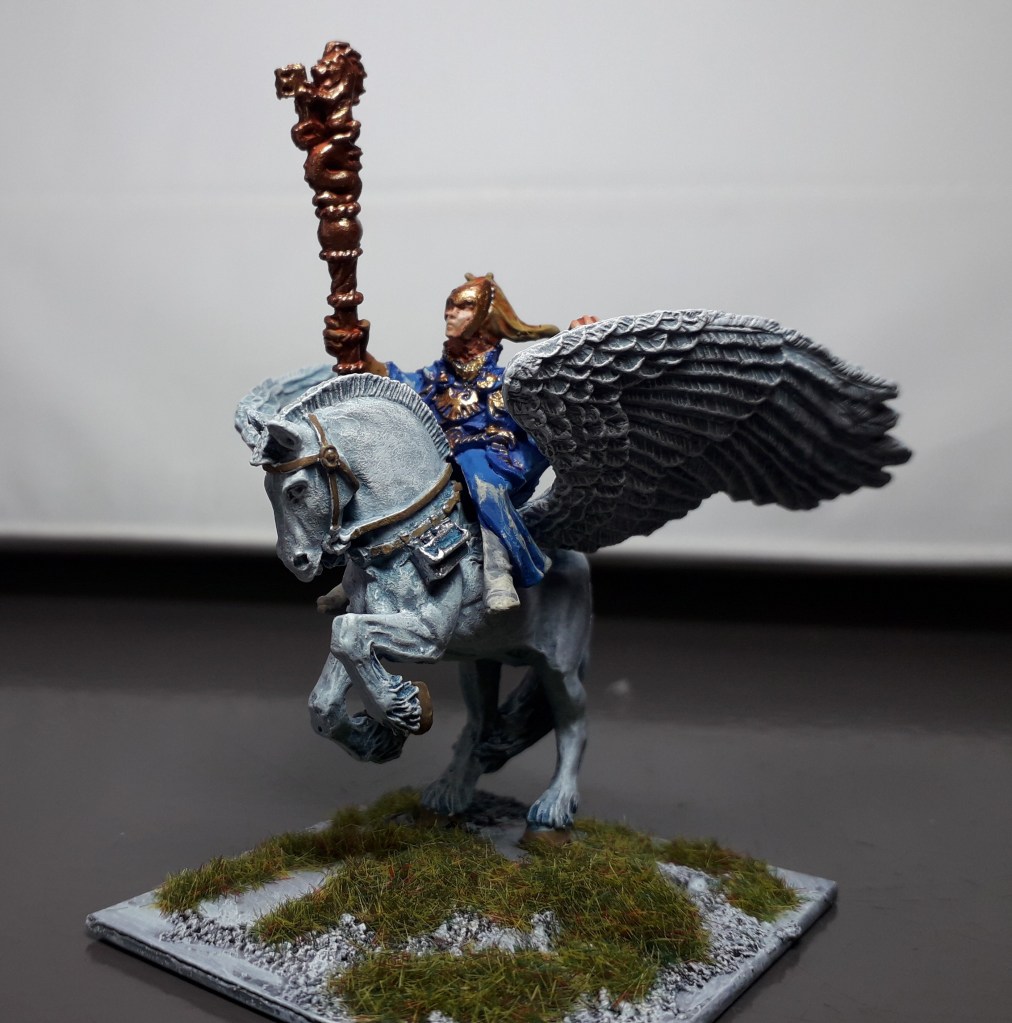
- 3 vampires on undead pegasi. (Slashing, crushing, staying stone)
The idea is to surge (pun intended) forward with the zombies + skeletons acting as chaff with the soul reavers + zombie trolls + goreblight behind to kill the opposing army. I built this army to test the zombie trolls if I can get them working (they still dont live up) . The fliers are to exploit gaps in the line and distract my opponent from spending too much attention to the z-trolls, goreblight and soul reavers getting closer to the base.
Zombie horde chaff doesn’t move that fast, but -/22 nerve is a lot for 115 points. Being shambling, they can be surged out of the way easily and 25 attacks @5+ will do enough damage to rout other chaff.
the battle
the scenario was dominate. I moved towards the centre, while taking positions with my flyvamps to exploit flanks if my opponent would do likewise. My opponent advanced very cautiously and started blasting with his lightning. First turn, he did some wounds to a zombie horde and on the 2nd turn he luckily wavered a vampire-on-pegasus. From that moment, my first units were in combat and being height 2, his blasters had a hard time finding a target not in combat. The luckily-wavered vampire was blasted again next turn (and survived) and in the 3rd turn finally routed. He had 12-ish wounds at that time.
The battle ended when in turn 3 my two vampires-on-pegasi charged exposed flanks and locked his battle line in combat. They were subsequently routed in my opponent’s next turn. In turn 4, I shufffled my remaining zombies out of the way and charged with my soul reavers and zombie trolls and killed his battle line.
Analysis
After the battle, I though about the use of lightining:
The lightning did quite some damage. It routed a vampire-on-pegasus and a zombie horde. It also did some damage to a number of other units.
Thing is, my list could cope with this. Having 3 hordes of infantry, that’s 3 times -/22 nerve to chew through. The Z-trolls have -/17 defense 5+ (and are in cover, always) and the target you want to hit (Soul reavers) is always behind shielding infantry of the same height.
33 lightning per turn is very high. It requires a large portion of the army in unlocks and points spent. Assuming the models don’t get killed (unlikely, protecting that many shooting units is hard) it’s a total of 198 shots over the course of a 6-turn game. Since these guys will be cowering behind your units most of the time, most shots will be from cover. Say, for the purpose of this blog post, that half of the shots are from cover, and the other half won’t. This means that over the course of the six turn battle 88 shots will hit.
The real targets one wants to take out have defense 5+, so let’s assume all the 88 hits are against defense 5+ targets. This means 44 wounds total over the course of the battle.
If I assume that a 5+ to rout is a rather certain rout (a 6+with inspiration is only roughly 50-50) one needs rout value minus 5 to destroy a unit. A typical elite unit like KoM knights will need 11 wounds to pass that thresshold and a unit of soul reaver infantry need 12 wounds. A typical 20/22 horde will need 17 wounds.
Most targets one wants to destroy are high powered elite regiments or large infantry/cavalry hordes. These type of units need 11 or 12 wounds to pass that thresshold. (16 or 17 rout value). In an ideal world where the distribution of said wounds is ideal, all lightning can shoot all turns and there’s no healing or regeneration, the lightning could destroy almost 4 of these units.
Against my army mentioned above, this would mean it can destroy all vampires on undead pegasi and a unit of soul reaver infantry. This is about 900 points of value. In an ideal world.
Practically, you would be lucky to achieve two-thirds of these wounds. Wizards die, you might have a lucky roll dealing far more damage than required or have an unlucky roll dealing nearly no damage, all are reasons why the lightning isn’t that effective that turn.
This means that spending more than 700-800 points on these units (and their unlocks!) is not helpful. Actually, it’s detrimental, since you will be spending more on the lightning units than they will destroy.
Conclusion: using lightning to destroy elite units is not going to work out
This is why building an army around lightning will probably not do that well. lightning can soften up, remove chaff, but will need to be followed up by close combat infantry.
Follow up questions
The follow-up question is of course: what purpose does lightning have if not destroying elites?
Lightning has a number of features that can be very helpful:
a) it does not suffer the -1 to hit against individuals or stealth
b) it has a 24 inch range with not penalty for move-and-shoot.
This means that lightning can hit anything, anywhere as long as there’s a way to make line-of-sight possible. The strong points of lightning bolts are:
a) Lightining is great for focus fire. 3 goblins wizzes with a boomstick can do 12 lightning on one target. This is 4-ish wounds against def 4+.
b) Lightning excells in destroying high-value-low defense-low nerve units. The ideal targets for lightning are chaff, war machines, low-defense characters and missile cavalry. A 9/11 banner bearer with 2 wounds from lightning will waver on a roll of 7 or 8, leaving the whole battleline without inspiration if it advances.
c) Lightning is great in forcing nerve checks. Once a unit is damaged, a single more point of damage can easily cause a waver (or even rout) taking them out of the game for at least a single turn.
So lightning is most effective taking out chaff or nasty individuals. If taken in multiples, lightning can also deal with units that are hard to catch (fliers, individuals) but almost to the exclusion of others.
It can also be used to destroy a pesky war machine and deal a single point of damage to force a nerve check. Even high-nerve hordes have a 1/36 chance to be wavered by a single point of damage (Boxcars) which can seriously ruin someones day.
Conclusion: Lightning does have its purposes. It’s just not the all-end solution one might want.

 Vince on all things Kings of War